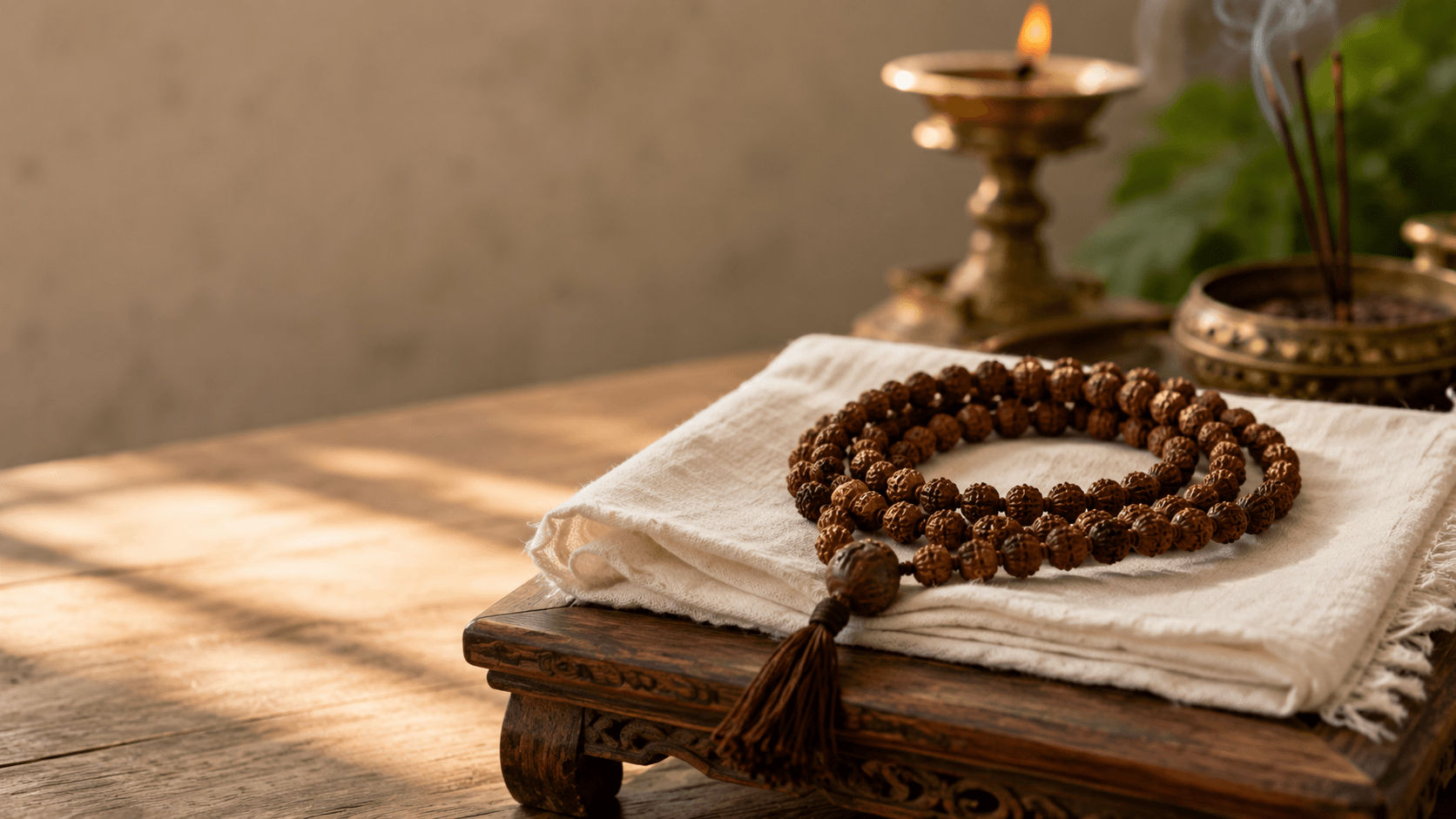
How to Do Mantra Japa with a Mala: 7 Simple Steps
How to Do Mantra Japa with a Mala is a question many beginners ask after receiving a Guru Mantra or deciding to make mantra chanting a regular part of their spiritual life.
While the heart of Mantra Japa has always been devotion and sincere remembrance of God, learning how to use a japa mala correctly can make your practice steadier and more attentive. Rather than becoming a mere counting tool, a mantra japa mala gently reminds us to return to the Divine Name whenever the mind begins to wander.
I haven’t personally practised chanting with a mala, as my Guru instructed me to do Mantra Japa on my fingers. Even so, I have always appreciated the simple guidance that Swami Sivananda shares in Japa Yoga. He explains that a mantra mala is much more than a string of japa beads. It gradually fills the mind with thoughts of God and becomes a quiet companion in one’s spiritual journey. I find that to be a beautiful way of looking at it. Anything that repeatedly brings our attention back to God has its own sacred purpose.
In this article, we’ll explore how to do Mantra Japa with a Mala step by step, based on Swami Sivananda’s practical teachings, so you can begin your practice with greater confidence, devotion, and understanding.
How to Do Mantra Japa with a Mala: Step-by-Step
Learning how to Do Mantra Japa with a Mala isn’t about memorising a series of rules. At least, I don’t think it should feel that way. A mantra japa mala is meant to support your practice, not make you anxious about getting every little detail right.
The following steps are based on the practical guidance shared by Swami Sivananda in Japa Yoga. If you follow a particular Guru or spiritual tradition, always give precedence to their instructions.
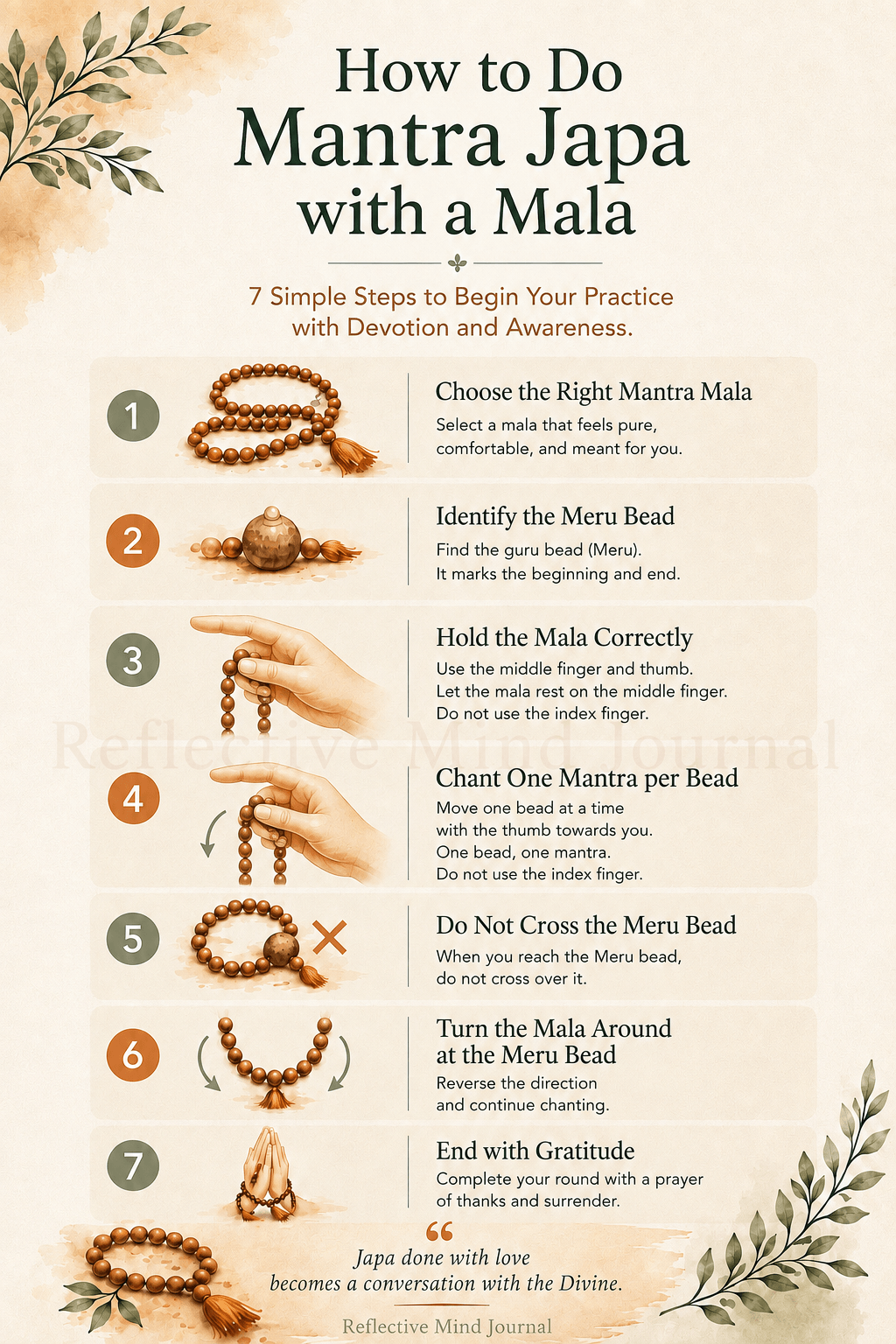
Step 1: Choose the Right Mantra Japa Mala Before You Begin
If you’re wondering how to use a japa mala, the first step is choosing one that is traditionally used for Mantra Japa. Swami Sivananda recommends using a Rudraksha or Tulsi mantra mala consisting of 108 beads. These have been used by spiritual seekers for generations and are considered especially suitable for mantra chanting.
What I appreciate about his explanation is that he doesn’t present the mala as a magical object. Its real value lies in how it supports your practice. When you hold the japa beads in your hand each day, they become a gentle reminder to return to God’s Name. Over time, even picking up the mala can quietly prepare the mind for prayer.
Step 2: Learn to Identify the Meru Bead Before Chanting with a Mala
Before you begin chanting with a mala, take a moment to identify the Meru bead. This is the larger or distinctive bead that marks the beginning and end of one complete round of chanting.
According to Swami Sivananda, the Meru bead is not counted as part of your repetitions. Instead, it serves as a point of reverence and reminds us that Mantra Japa is more than simply completing numbers. I think this is a beautiful reminder. Even while counting, our attention is gently brought back to the sacredness of the practice rather than the count itself.
Step 3: Hold the Japa Beads Correctly While Chanting
Once you’re ready to begin How to Do Mantra Japa with a Mala, hold the japa beads using your right hand. Swami Sivananda advises moving each bead with the thumb while using the middle finger to support the mala. The index finger is traditionally not used during Mantra Japa.
As you repeat your mantra, move to the next bead only after completing one repetition.
There’s no need to rush. In my experience, whether we count on our fingers or use a mala, the mind naturally becomes calmer when we allow the rhythm of the mantra to remain slow and attentive.
Step 4: Move One Bead at a Time on Your Mantra Mala
A common mistake beginners make is moving several beads quickly while trying to finish a round. Swami Sivananda’s guidance is much simpler. Repeat your mantra once, then gently move to the next bead.
This steady rhythm helps your mantra mala become an aid to concentration instead of a distraction. If your mind wanders, don’t become discouraged. Simply return your attention to the mantra and continue from the bead in your hand. I think all of us experience a wandering mind from time to time. What matters is quietly returning to God again and again.
Step 5: Never Cross the Meru Bead While Using a Mantra Japa Mala
One of the most important instructions in How to Do Mantra Japa with a Mala is what to do when you reach the Meru bead. Rather than crossing over it and continuing in the same direction, Swami Sivananda advises turning the mantra japa mala around and beginning the next round in the opposite direction. The Meru bead is treated with reverence and is never crossed during the practice.
This may seem like a small detail, but I find that these small acts of reverence quietly cultivate mindfulness. They remind us that Mantra Japa is not something to be hurried through. It is an offering of love to God.
Step 6: Let Chanting with a Mala Become Prayer, Not Just Counting
As you become more comfortable chanting with a mala, try not to let all your attention remain on the count.
The beads are there to support your practice, but the real purpose of Mantra Japa is remembering God.
There may be days when your concentration is deep and other days when your thoughts seem to wander endlessly.
Don’t judge your practice too quickly. Simply continue repeating your mantra with sincerity. Over time, you may find that the mantra mala gently brings your attention back whenever the mind begins to drift.
Step 7: Complete Your Round with Gratitude and Reverence
When you finish one complete round of How to Do Mantra Japa with a Mala, avoid putting the mala aside immediately. Remain seated quietly for a few moments and offer your gratitude to God before returning to your daily work.
Swami Sivananda’s instructions throughout Japa Yoga remind us that external methods are meant to deepen our inner life. Whether you practise with a mantra japa mala, count on your fingers as I do, or follow another method under your Guru’s guidance, the heart of the practice remains the same: lovingly returning to God’s Name, one repetition at a time.
How to Do Mantra Japa with a Mala: Final Thoughts
Learning How to Do Mantra Japa with a Mala helps us follow a time-honoured spiritual tradition with greater understanding and reverence.
The practical guidance shared by Swami Sivananda gives us a beautiful foundation, but don’t let the desire to remember every instruction stop you from simply beginning. If you accidentally lose your count or forget a small detail, don’t become discouraged. Gently return to your mantra japa mala and continue your practice.
I have often found that spiritual habits become steady through repetition rather than perfection. The more regularly you pick up your mantra mala, the more naturally it begins to become part of your daily rhythm.
Over time, the japa beads may become much more than a way of keeping count. They quietly remind you to pause, gather your scattered thoughts, and return to God, one bead and one mantra at a time.
Frequently Asked Questions
How do you use a japa mala correctly for mantra japa?
If you’re learning how to use a japa mala, begin by holding the mala in your right hand and moving one bead after each repetition of your mantra. Swami Sivananda recommends using the thumb and middle finger while avoiding the index finger. When you reach the Meru bead, don’t cross over it. Instead, reverse the direction and continue your mantra japa. With regular practice, the process gradually becomes natural.
Which hand should you use for mantra japa with a mala?
According to Swami Sivananda’s Japa Yoga, mantra japa with a mala is traditionally practised using the right hand. The beads are gently moved with the thumb while resting on the middle finger. If your Guru or spiritual tradition has given different instructions, it is always best to follow their guidance with sincerity.
What should you do when you reach the Guru bead in a japa mala?
The Guru bead, also known as the Meru bead, marks the beginning and end of one round of a japa mala. Rather than crossing over it, Swami Sivananda advises turning the mala around and continuing your next round in the opposite direction. This simple practice reflects the traditional reverence shown towards the Meru bead during Mantra Japa.
Can beginners do mantra japa with a mala?
Absolutely. In fact, many beginners find Mantra Japa with a Mala helpful because it provides a gentle rhythm for the practice without needing to keep the count mentally. Don’t worry if your concentration isn’t perfect in the beginning. Like any spiritual discipline, familiarity grows with regular practice, and the mala gradually becomes a quiet support rather than a distraction.
Which mala is best for mantra japa: Rudraksha or Tulsi?
Swami Sivananda recommends both Rudraksha and Tulsi as suitable choices for a mantra japa mala. Rather than trying to find the “perfect” mala, choose one that aligns with your Guru’s guidance or the tradition you follow. The sincerity with which you practise Mantra Japa will always matter far more than the material of the mala itself.