Why Do I Feel Drained After Socializing Even With People I Like?
I genuinely needed a break, even if it was for a day or two.
No deadlines. No laptop. Not even reading my favourite titles. And yes, no doom scrolling.
And I get to go on one — a nearby hill station with cousins.
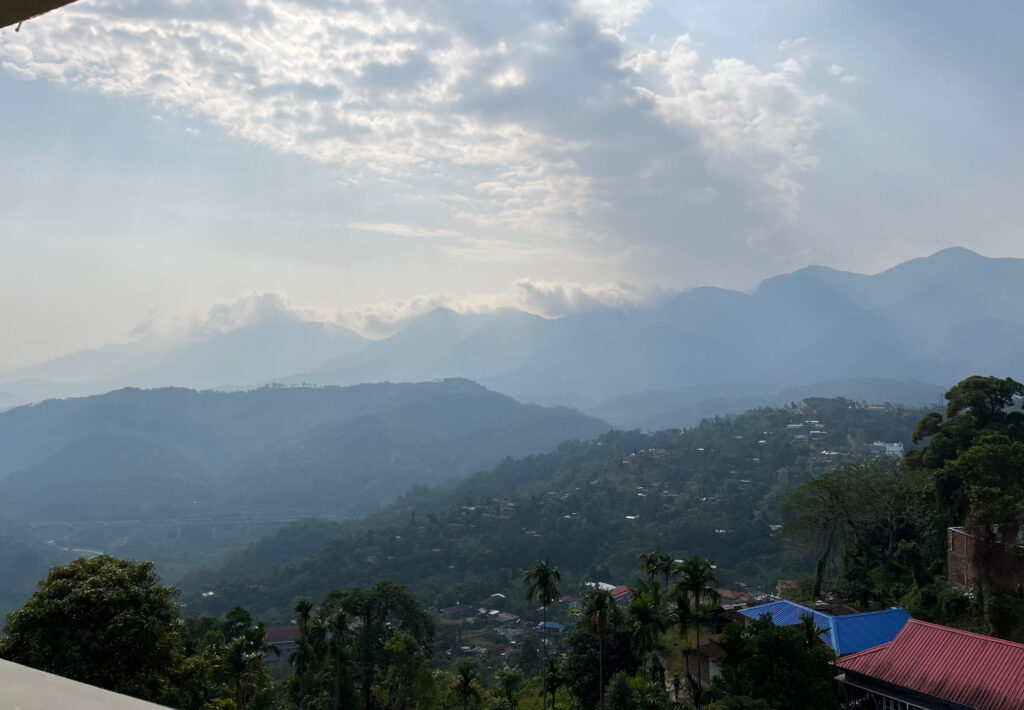
The weather was a perfect fit for that evening, and we were having the best time on the hotel balcony… laughing, talking, the kind of loose, celebratory energy that runs well past midnight.
And I was there. Physically present, occasionally saying something, even enjoying the view.
But somewhere around the second hour, something in me had already quietly left. As if the quota I had kept for myself for company was over.
And it kind of disappointed me. I really wanted to be more present. But deep within, I knew I just can’t.
Why do I feel drained after socializing — even on an evening that was, by every measure, a good one — is a question I have had to sit with more honestly than I expected.
Maybe you know this feeling too. The gathering ends. Everyone else seems energised, or at least satisfied. And you come away feeling like something was slowly drawn out of you — not taken roughly, just… steadily used up.
This is not about being an introvert. That explanation never quite fit.
And it is not quite the same as feeling like you are too much for people — that is a different weight altogether.
Feeling exhausted after social interaction when you actually enjoyed the time — that is a different thing entirely. And if that feels familiar, stay with this.
Because what is underneath this feeling is not what most people assume it is. It was never about the people.
It was about something much quieter — what happens inside you when the room’s frequency and yours simply don’t match.
Why Do I Feel Drained After Socializing When I Actually Enjoyed the Time?
It is not the people. It is not the noise. It is the gap.
The quiet, invisible gap between the energy in the room and the energy you actually live in. And staying inside that gap — even when the evening is genuinely good — costs something that is difficult to name but impossible to ignore.
Why do I feel drained after socializing is not always about the interaction being bad.
Sometimes the evening is genuinely worth it. The laughter is real. The connection has its moments. But there is a version of you that can only hold that field for so long before something starts quietly leaking. Perhaps hitting an unknown ceiling that my mind follows. A cutoff switch.
1-2 hours is fine. Beyond that, something shifts.
And this is where the introvert explanation falls short. Introverts get drained by too much stimulation — too many people, too much noise. But you can be in a quiet room with just a few people you genuinely like and still come away emptied. That is a different thing entirely.
This is about something deeper — the sustained effort of existing inside an energy that is simply not yours. Of being present, engaged, occasionally contributing — while a quieter part of you is already somewhere else. Watching the view. The night air. Waiting, not cruelly, just honestly. Even deep inside, sometimes wishing… the people just be there — giving me that quiet sense of being held. While I exist beside them, without having to perform.
Feeling exhausted after social interaction when nothing went wrong is not a personality quirk. It is your system telling you something true.
The question is — what exactly is it holding together during those interactions, and what does that quiet effort actually cost?
Why Does Being Around People Drain My Energy Even When Nothing Went Wrong?
Here is the answer to that question.
Because something was happening underneath the surface the whole time.
Not conflict. Not discomfort. Just a quiet, continuous effort of holding your inner world intact while existing inside someone else’s. And that effort — invisible to everyone in the room, including sometimes yourself — is exactly what why does being around people drain my energy points at.
You were present. You were engaged enough. The occasional exchange that felt real. But a part of you was also quietly doing something else. Watching. Observing. Reading the room without being asked to.
That is not passive. That is an enormous amount of invisible processing. Not the kind that exhausts you dramatically. The kind that you only notice when it stops.
And when it is finally over — when you are back in your own space, in the quiet — you do not reach for anything specific. You do not journal, debrief, or call someone. You simply let the silence come. Sleep, if it is late enough. The system resets on its own, like weather passing.
But here is what that pattern quietly costs: the depletion never gets examined. It just gets survived. And so it returns, unnamed, the next time the evening runs longer than your threshold.
You know that particular tiredness — not of the evening, but of never quite knowing what to call what happened to you in it.
Which means the drain was never the problem. The absence of language for it was.
Why Do I Feel Drained After Socializing — You Were Never the Problem
You were present. You showed up. You gave what you had until the quiet cutoff came.
And if why do I feel drained after socializing is something you have asked yourself with a small edge of shame — put that down. There is nothing wrong with your capacity for people. There is just something very specific about your capacity for misalignment. Some invisible limit you carry. Everyone carries, I guess, unknowingly. Some have a higher bar and some a lesser. And that specificity is not a flaw.
The one sitting slightly apart — that is not someone who failed the evening.
That is someone who knows exactly how much of themselves they can give — and is honest enough not to pretend otherwise, at least with themselves.